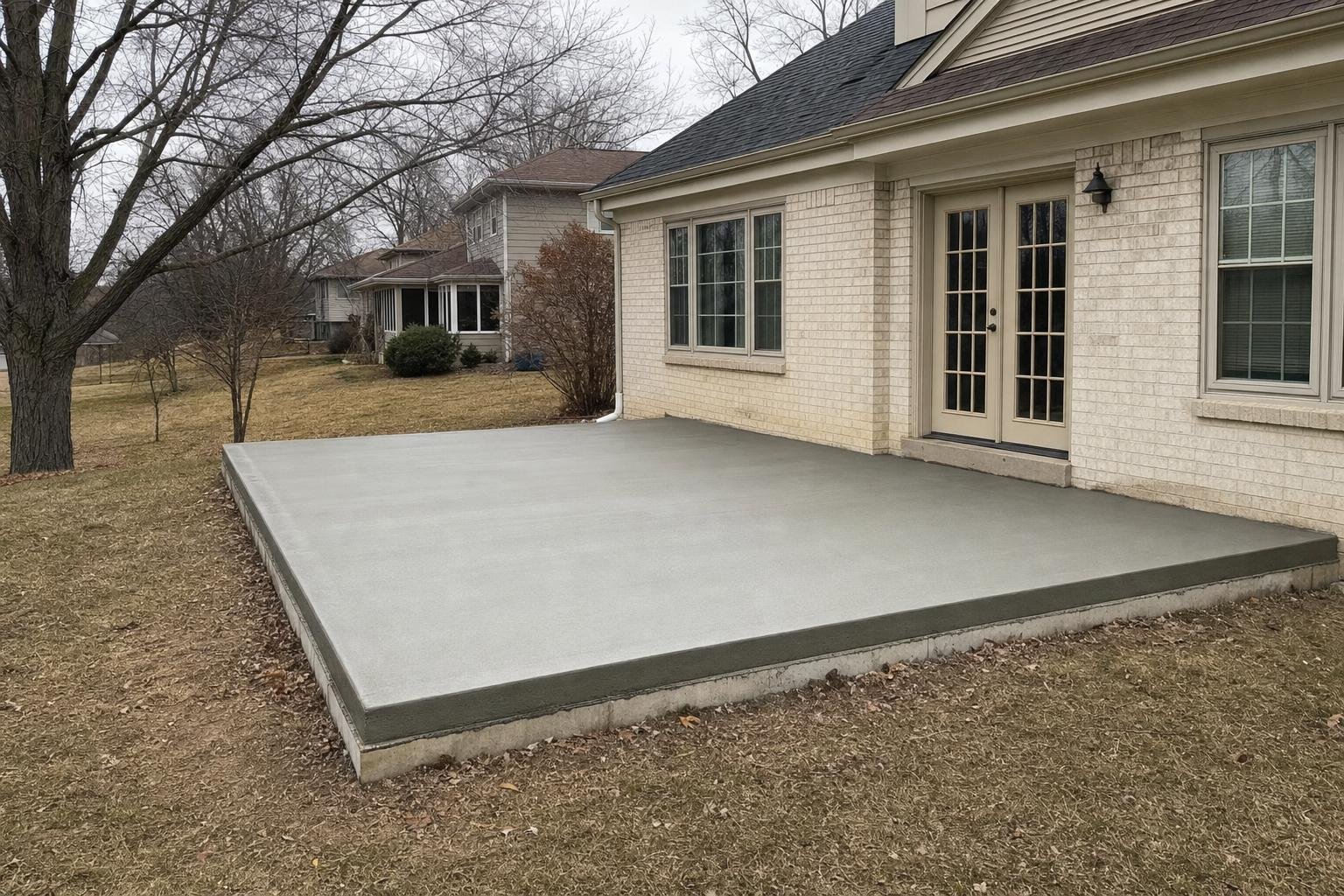
Either way, the first questions are whether it needs doing and what it'll cost. Pinecrest Concrete Contractor Co. walks your Cedar Rapids property and hands you a written quote, and a ballpark range is available as soon as you phone.
How do I know if my foundation or slab needs work?
You need work when a foundation wall has cracks where one side sits higher than the other, when water comes through concrete that used to stay dry, or when a slab has settled or heaved enough to make a trip point. Surface flaking alone is a smaller question.
A slab that's spalling, or showing exposed aggregate where the top is breaking away, is wearing out, and that's usually a resurfacing or replacement call rather than a foundation problem. One narrow crack that has stayed the same width may need nothing at all, and if that's what we find, we'll say it at the walkthrough. If you're planning to finish a basement or add weight above a cracked wall, get the wall looked at first, because that's the point where a cheap fix turns into an expensive one.
Often paired with concrete resurfacing. Need a concrete contractor in Cedar Rapids? Start on our home page.
Related reading: What Happens During Concrete Work: The Steps Explained · Hiring a Concrete Contractor: Questions Worth Asking First
What does foundation and slab installation cost?
Stem-wall foundations price out between $5.50 and $17 per sq ft. Call and we'll talk through that range; the firm number is written up once we've walked the site. Footprint, wall, reinforcement and ground are the four things that set it.
The square footage of the footprint is the first number. From there, the price moves with how deep and heavily reinforced the wall has to be, and with what the subbase turns out to be once we excavate. Soft ground that needs more gravel, or a wall that needs more footing rebar, pushes it up. If we can't get a truck or a wheelbarrow route close to the forms, labor goes up too. Each of those items gets its own line in the written quote, and that's all settled before concrete is ordered.
What's involved in the work itself?
We set footing rebar over a compacted gravel subbase, place the concrete into the forms, strike it off with a screed, and bull-float it. Then the concrete cures, we backfill between the excavation and the finished foundation where required, and we grade the ground to slope away from the house.
The gravel subbase is what the concrete sits on, so it's compacted before anything is poured. The rebar goes into the footing first, so it's locked in when the concrete is placed. Order matters at the surface: the screed sets the grade, and the bull float comes after it to close up the top. Grading away from the house is what keeps water from sitting against the foundation wall.
Do the 2020 derecho and the Cedar River flood change how you build?
They change what we look at more than how we pour.
For sheds, garages and porches, the derecho is a reminder that exposed outdoor structures depend on their concrete supports, which is one reason the footing rebar goes in on every stem wall. For a lot close to the Cedar River, mention that on the first call. The flood put water into thousands of houses, so on those lots the grade away from the foundation and what the gravel subbase sits on get the closest look on our site visit.
What happens when I call?
Someone at Pinecrest Concrete Contractor Co. answers and asks what you're building or what's failing, the approximate size, and the address. Nothing gets committed on that call. You can get the typical range then, and the exact figure follows the site visit.
Photos or a rough sketch help if you have them, but you don't need drawings to call. We book a visit, check the ground and measure the footprint. The written quote that follows names the work, the materials and the price, and you decide whether to go ahead and when. To start, call Pinecrest Concrete Contractor Co. and describe the crack, the slab or the addition.
What the Work Covers
On a typical job, the work covers:
- Determine footing and foundation dimensions from the building design, soil and site conditions, and applicable code requirements.
- Excavate the foundation area and footing locations to the specified dimensions.
What It Typically Costs
The figures here give you a sense of scale, and we put the exact price in writing before any work starts.
$5.50–$13.50 per sq. ft.
$4–$17 per sq. ft.
$5.50–$11.50 per sq. ft.