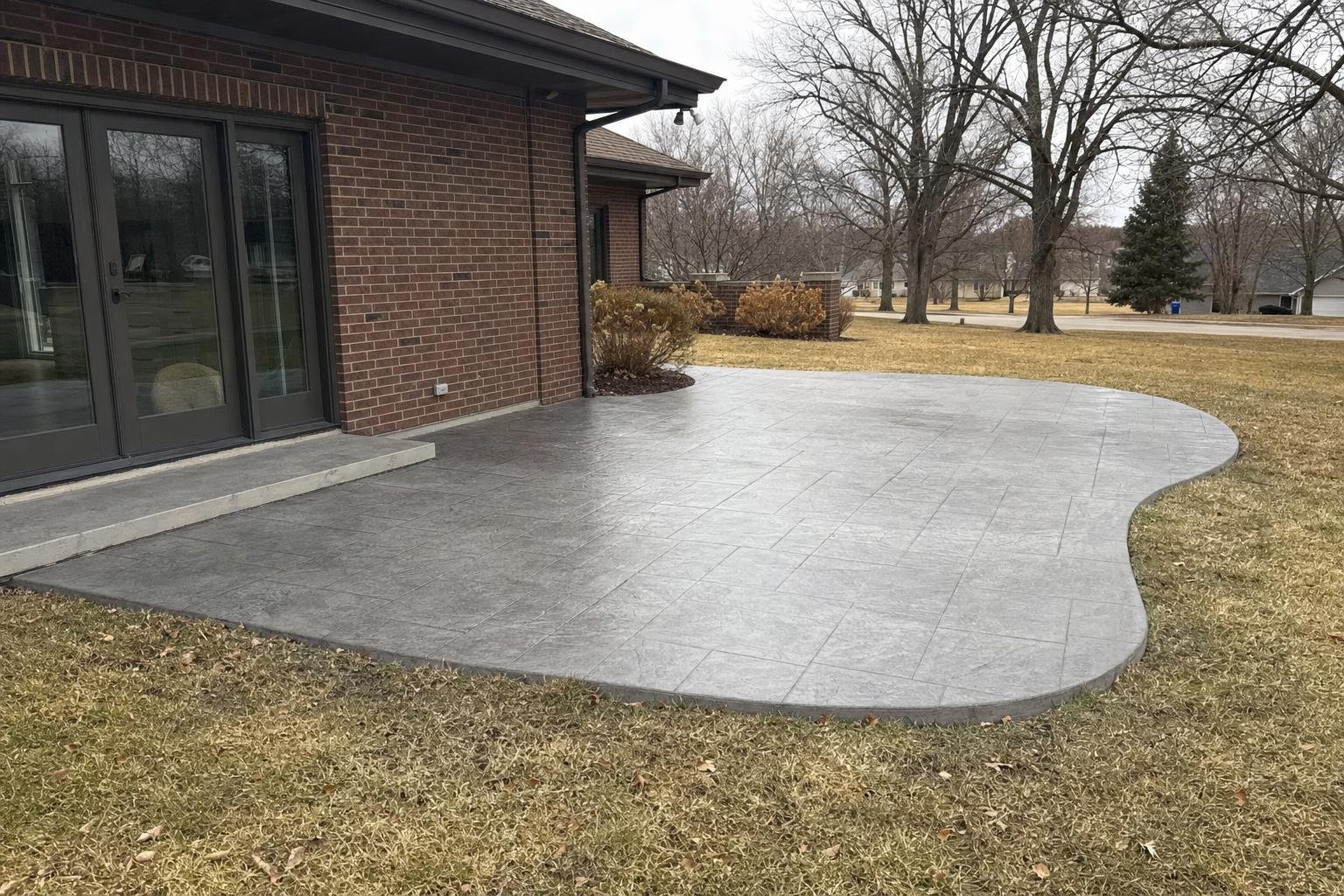
Your driveway has a crack that keeps opening, a walk panel that's dropped an inch below the one next to it, or water that stands against the garage slab after every hard rain. You want to know whether it's a patch or a pour, what it'll run, and whether it can wait until spring. Call us and we'll come out, put a level on it, measure it, and tell you straight, including when the honest answer is that you don't need us yet.
Why flatwork here keeps moving
The ground under most slabs here is deep silty clay loam, and it holds water far longer than sand or gravel would. Concrete doesn't sit on dirt. It sits on whatever base went under it, and when that base stays wet, it moves and the slab goes with it.
Cold continental winters with hard freezes do the rest. Water in the base freezes, lifts, and lets go in spring, so a crack that was hairline in October is a finger wide in March, and a panel can heave at one corner while the rest stays flat. That's the ground going up and down, not the concrete failing on its own.
Most of the houses we work on are old enough to have been through a lot of those winters. Nearly half the homes in Cedar Rapids went up between the 1950s and 1970s, the median year built is 1973, and detached single-family houses make up most of the owner-occupied stock. So the typical job is a driveway, walk, patio or foundation on a house with a fifty-year-old slab. One that's still flat and draining is doing well. One that's cracked, settled and holding water has usually earned a replacement.
What kinds of concrete jobs do we take on?
We do removals and replacements, and repair where the base under a slab is still sound. Anything that isn't concrete work gets a straight no on the first call.
A replacement starts below the concrete. We excavate to the required depth, remove soft spots, and prepare a level subgrade. Then we grade and compact it and, where the job calls for it, place and compact an aggregate subbase. In clay soil that base work is what decides whether the new slab is still flat after a few winters.
A fair amount of what we do is telling people their slab doesn't need replacing yet. A single hairline crack in a slab that still drains away from the house can usually wait.
How do we figure out what the slab is doing before quoting?
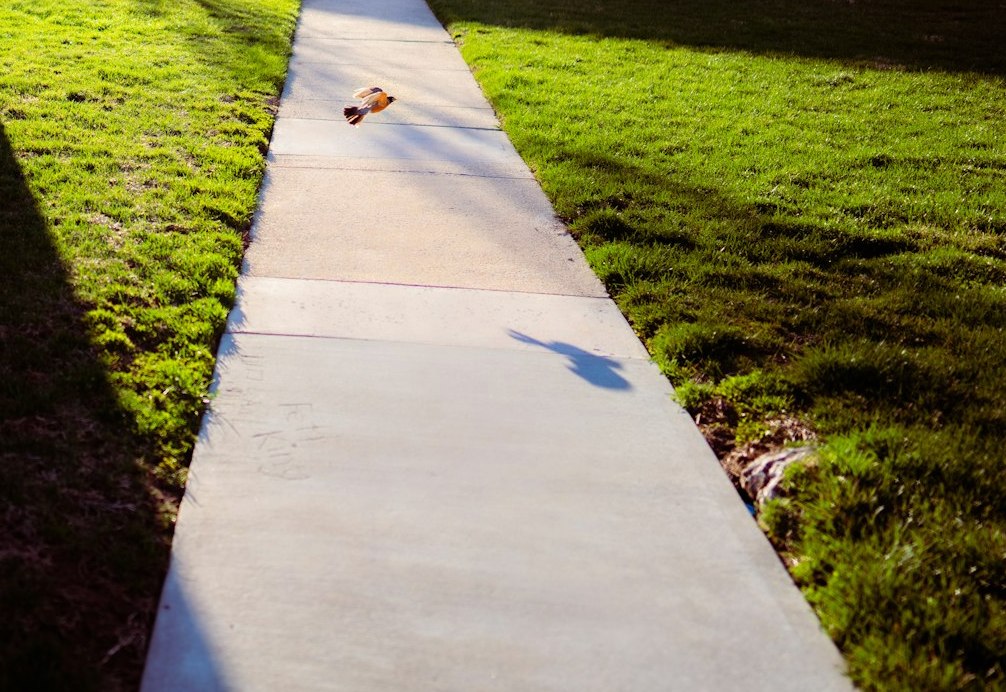
A slab can be settled, heaved, or simply cracked where it sat, and the price follows from which one it is. Those three have different fixes, and only one of them usually means a new pour. A panel that dropped at one corner has a base problem under that corner. One that's high in the middle has had water get underneath and freeze.
The straightedge and level go on the slab first. Then we check where the downspouts empty and how the yard slopes away from the foundation. Water is usually the real culprit, and moving a downspout can matter as much as the concrete.
The quote you get afterwards is a written scope, not a number on the back of a card. It lists square footage, thickness, how deep we plan to excavate, where the joints fall, the finish, and what happens if we open it up and find more soft spot than anyone could see from the surface. We'd rather write that down at the start than have that conversation in week two.
What should I do next?
The visit ends with a measured answer on whether it's a patch, a pour, or something that can wait. Nothing is signed on the spot.
What to Expect
Each request follows the same few steps:
-
Reach Out
Tell us what you need done and when, you get a straight answer and no sales pressure.
-
We Take a Look
We see the job in person, and you see what we see.
-
Written Estimate
We put the work, the timeline, and the number on paper before you agree to anything.
-
We Do the Work
We finish the job and walk it with you, and the work is checked before we leave.
Our Services in Cedar Rapids
Concrete Driveway Installation
Details →Concrete Patio Installation
Details →Stamped Concrete Installation
Details →Concrete Walkway and Sidewalk Installation
Details →Concrete Slab and Foundation Installation
Details →Concrete Resurfacing
Details →Polished Concrete Floors
Details →Concrete Repair and Restoration
Details →How We Handle Every Job
Tell Us About the Job
No obligation
Call (319) 536-8587How this works
- Call, or fill this in
- Someone local calls back
- Ask anything, no obligation
Typical Cedar Rapids Pricing
Treat these figures as a planning guide, and you get a written price for your own job before you commit.
$7.50–$19 per sq. ft.
$9.50–$13.50 per sq. ft.
$5–$7.50 per sq. ft.
Communities We Cover
We work across Cedar Rapids, IA, and whether you're in Marion, Hiawatha, or right in Cedar Rapids, the process is the same. Call (319) 536-8587 if your town isn't listed here.
- Cedar Rapids, IA
- Marion
- Hiawatha
- Fairfax
- Robins
- Ely
- Atkins
We cover 7 communities.
ZIP codes: 52404, 52402, 52403, 52405, 52411, 52401.