Repair or replace: how we decide
We start by deciding whether the concrete is worth saving. We tap across the surface with a sounding hammer and listen. Solid concrete rings. A hollow sound means the surface has separated from what is beneath it, or there is a void under it, and that section usually has to come out and be repoured rather than patched. If it rings solid but is cracked, spalling or worn, repair is usually the right call.
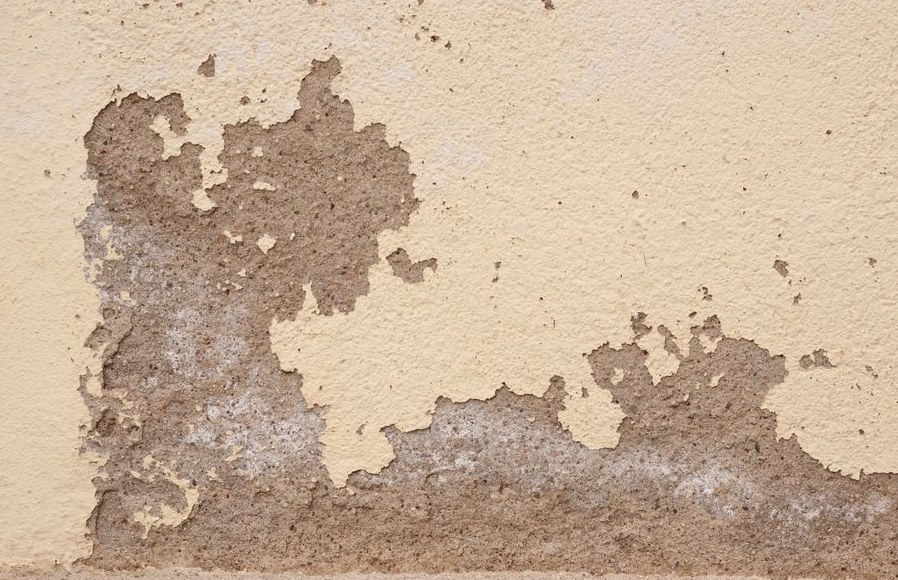
Spalling is when the surface chips or flakes away, sometimes exposing the reinforcing steel. Slabs that have shifted or are pitched the wrong way need more than a patch, because a patch leaves the movement or the bad drainage in place.
How the repair work goes
For a patch, we saw-cut around the damaged area so the new material bonds to clean, solid edges instead of crumbly ones, and remove everything loose. We sound the remaining concrete again to confirm we have reached good material. If steel is exposed, we look at its condition and tell you what we find before anything gets covered.
Before placing repair material, we bring the prepared concrete to a saturated-surface-dry condition. Then we place and consolidate the material, finish it, and cure it according to the manufacturer's instructions. We don't rush the cure, because a patch that hasn't cured properly won't hold.
Cracks that run vertically get epoxy. We pressure-inject from the lowest port and move up, continuing at each adjacent port as epoxy shows up there. That fills the crack through its depth rather than just sealing the top. It also matters whether a crack is still moving or has been static for years, so we check that first.
What structural spalling repair costs
Structural spalling repair with exposed reinforcing steel typically runs $8 to $15 per square foot. Call and ask for the typical range; the exact figure is set after we have looked at the job.
The price moves with the amount of exposed steel and the volume of concrete we have to cut out to reach solid material. Access matters too. The concrete saw needs room to work, so a section tight against a wall or post takes longer. Several separate repair spots on one slab cost more than one spot of the same total area, because each one needs its own cutting, prep and placement.
Signs it's time to call
Look for chunks breaking away, especially where you can see rebar, cracks with a step between the two sides, crumbling edges, and water that pools instead of running off. On a garage floor or driveway, a surface that sounds hollow when you knock or walk on it is a warning sign. In a basement, call about any crack that is leaking or any floor that feels soft underfoot.
With our winters, waiting costs money. A crack that could be sealed this fall can turn into structural spalling after a few freeze cycles. If you can't tell whether patching or replacing makes more sense, call us and we'll say which we think it is.
Getting Started Is Simple
Step by step, the specifics look like this:
- Clean exposed concrete and reinforcement with high-pressure water or abrasive blasting, removing loose and bond-inhibiting material.
- For epoxy-injection crack repairs, clean the crack, install injection ports at suitable intervals, and seal the crack between ports.
Typical Cedar Rapids Pricing
Plan around these figures, and the final price goes in writing before anything starts.
$3–$8 per sq ft